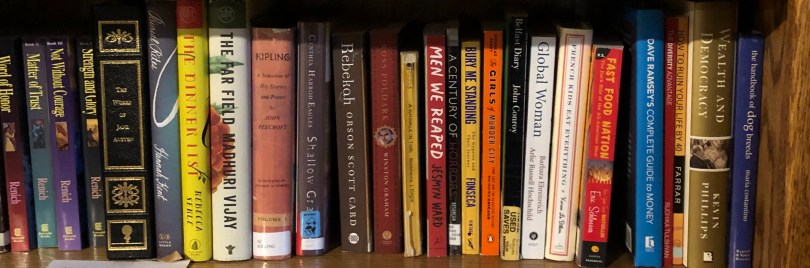
It’s the time of year when all the lists appear. Favorites, memories, lessons, recommendations, habits, and more will dance across your screen as summaries of this year or hopes for the next.
Among these lists come the ones about books. If you’re a reader, then bestsellers, record-breakers, and rising stars will flood your feed (social media’s creepy like that – or maybe you just have great friends who share this information).
Books have the power to change our lives, and each year I wonder which ones I’ll find that leave a lasting impact on me. Lucky for you, I’ve been keeping notes, so I can share some of the heavy hitters from this year!
- The Vanishing Half by Brit Bennett
- Get Out of Your Head by Jennie Allen
- Native: Identity, Belonging, and Rediscovering God by Kaitlin B. Curtice
- The Color of Compromise: The Truth about the American Church’s Complicity in Racism by Jemar Tisby
- I’d Rather be Reading: The Delights and Dilemmas of the Reading Life by Anne Bogel
Off we go!
The Vanishing Half by Brit Bennett
This was a fascinating read about twins in the Deep South who can “pass” for white, and how social understanding of whiteness affects the paths of their lives. One day, the sixteen-year-olds run away, and the decisions they make from there send them in wildly different directions: one, returning to the South with her dark daughter, and the other, enjoying high society as wife to a white man who doesn’t know her story.
The sisters are bound by more than blood, and the way they interact and understand their family history meant a lot to me. As a multiracial woman who doesn’t carry obvious physical signs of her heritage, I felt more understood than I anticipated. The weight of heritage leaves its mark on us, whether we want to admit it or not, and deep pain can come from choosing to ignore it.
Warning: This book contains some graphic scenes that are not for children.
Get Out of Your Head by Jennie Allen
Jennie Allen shares her story of mental and spiritual warfare, fighting a thought process that often caused her to spin out of control and out of faith into an attitude of hopelessness. Allen shares that we have the agency and ability, by the power of the Holy Spirit, to combat thought patterns with truth before we get out of hand. Not only is this truth, but there are accessible tools to use to grow stronger and build better habits in this area, and she reminds us of many of them in the second half of the book.
I had my reservations starting this book and study (online – videos available). Allen seemed high energy for my even-keeled self, and I wondered if I’d have to wade through all the enthusiasm to get to truth. Thankfully, I didn’t! Allen is straightforward and true, reminding believers that we don’t need to continue in our old patterns. God has given us what we need to move forward, and we need only practice handling those tools to become more adept. Practicing before we fight, too, is advised!
Note: Allen acknowledges the need for medication and counseling in extreme cases and does not pretend to be a medical professional. She doesn’t treat the tidbits she shares as replacement for true professional assistance. She does, however, point out that we often bypass God’s help and instructions and wonder why our lives don’t change, and that can make things worse than they need to be.
Native: Identity, Belonging, and Rediscovering God by Kaitlin B. Curtice
I hadn’t encountered a book from a Native American person who also believes in Jesus. (I’ll say that I haven’t gotten out much in this department. I want to do more reading and following of Native voices in general.) I have loved reading the stories and histories of Native peoples, and have wondered how a history tortured by white, colonizing people who have professed or forced Christianity on them could reconcile with the one, true God. Curtice shares her own internal conflict, proving and insisting on speaking up for her people’s presence and maintaining faith that challenges the white evangelical mainstream.
Again, as a multiracial, Christian woman raised in the evangelical tradition, making sense of such contrasting approaches can become confusing and painful. I appreciated Curtice’s bravery in sharing her story and pointing out the ways that we can not only respect Native peoples and their heritages, but also respect them as peoples with unique understanding of relationship with God, the earth, and others. Their priorities challenge the priorities of the historically white United States, those that elevate profit over wise and respectful use of our natural resources and erase challenging voices to the national narrative rather than wrestle with a history that has abused those voices. By the end of this book, I entered a greater state of awe at a God that has made so many different people so beautifully. Without the Native part of the story, our story (whether of God, the earth, or the U.S.) is incomplete. I want to practice bravery to include them wherever I go from here on.
The Color of Compromise: The Truth about the American Church’s Complicity in Racism by Jemar Tisby
This book is a survey of U.S. church history and its decisions to support and uphold racism since colonial times. Tisby makes sure to define “survey” for readers: this is by no means everything that happened, and there are some events and names left out, but the main points are there. In a sweep of theology, cultural history, and social theory, Tisby points out that the decisions to use racism to oppress and suppress the presence of Black people in the United States were just that: decisions. “If racism can be made, then it can be unmade.” The details aren’t pretty, and we have a long way to go, but things can be different if we choose to make them so.
I appreciated this book for its truthfulness, in holding back none of the gory details that came with the impact of terror-inducing and downright evil acts taken by those who professed to be Christians. With the air of pain, however, came one of hope, that we don’t need to further the acts and traditions that came before us. We as the Church in the United States can love our Black brothers and sisters and uplift them in their struggle for fair treatment and opportunity. The decisions are often simple, but they are rarely easy or popular, and we must have courage to do the right thing over the popular thing.
I’d Rather be Reading: The Delights and Dilemmas of the Reading Life by Anne Bogel
This one felt like a warm hug from an understanding friend. Bogel talks about all things reading, from how to choose a next book, to libraries vs bookstores, to growing into the reader you are while keeping all the readers you were before. I felt understood and welcomed in the quirks and fun that come with loving and reading books and wanting to connect with other readers.
I finished this sentimental, thoughtful read in under 24 hours, and I’ll likely read it again. After, of course, I ask all my reader friends if they’ve read it yet.
There you have them! I have a couple of books in progress that I hope to finish before the year ends, but these are the ones I’ve talked about and keep talking about with friends and relatives. As always, if you want more detail or live updates on my reading progress, feel free to find me on Goodreads.
I hope you can point to a few key reads that have helped make your year a little brighter, or one of growth, when so much feels stagnant and difficult.
All the best,
Rebekah
 Rebekah L. Streeter
My first time reading your blog and I enjoyed your honesty. Book reviews were great! I am a fan of sharing good books. Im not online often, but glad i caught this! Bev Harris (cousin)
LikeLiked by 1 person
Thanks for reading, Bev! Book reviews are a favorite to write and share. I’m glad you enjoyed them!
LikeLike